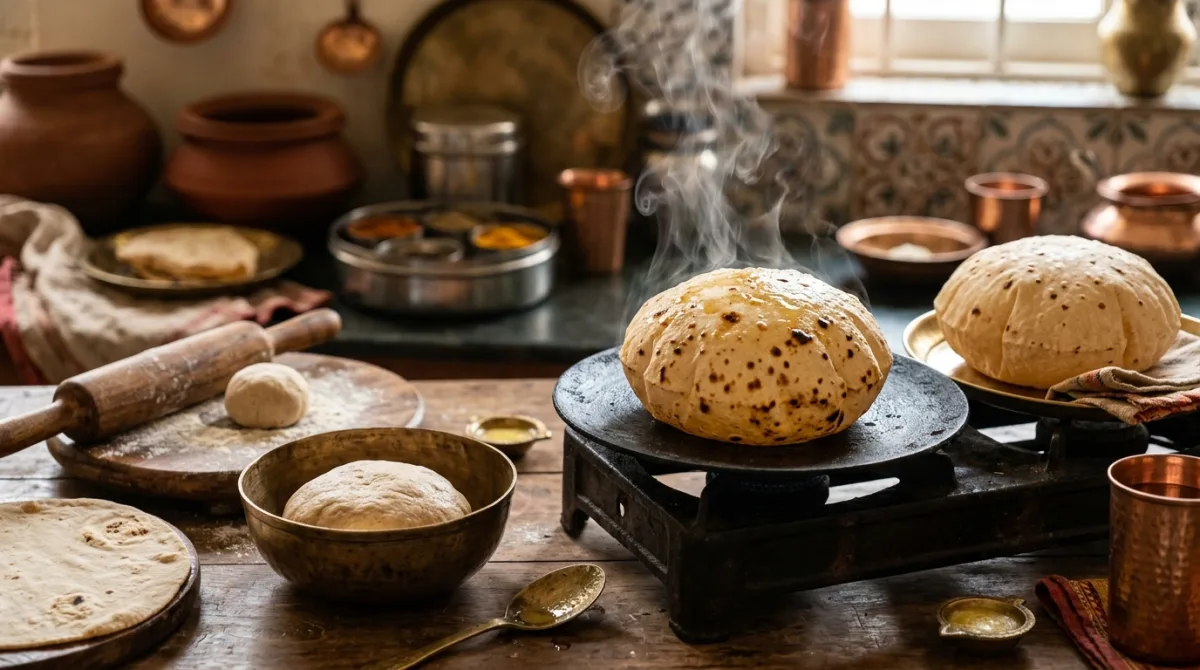
Step into almost any modern Indian household during dinner preparation, and you will witness an unspoken culinary anxiety: Will tomorrow morning’s tiffin rotis turn into stiff, leathery discs, or will they remain as pillowy, tender, and fragrant as the moment they left the tawa? Behind this everyday question lies a profound agricultural and biochemical contrast between authentic, slow-grown Sharbati whole wheat and the high-yielding, industrially hybrid flours that flood supermarket shelves today.
Executive Takeaway
Authentic Sharbati wheat, cultivated primarily in the rainfed black cotton loam of Saurashtra and Central India, possesses a distinct genetic profile rich in natural sucrose isomers and undamaged starch granules. It delivers a 15% lower glycemic impact, 25% higher water absorption, and completely bypasses the artificial bleaching agents ubiquitous in commercial roller-mill flours.
1. Agronomic Terroir: Why Sharbati Grain is Crowned the "Golden Grain of India"
Botanically designated under superior strains of Triticum aestivum, Sharbati is not merely a label; it represents an extraordinary ecological harmony. While commercial dwarf wheat crops rely heavily on artificial canal over-irrigation and intensive chemical nitrogen fertilisation to maximize per-acre tonnage, true Sharbati is traditionally cultivated in deep, organic-rich black clay loam (Regur soil) under arid, rainfed conditions.
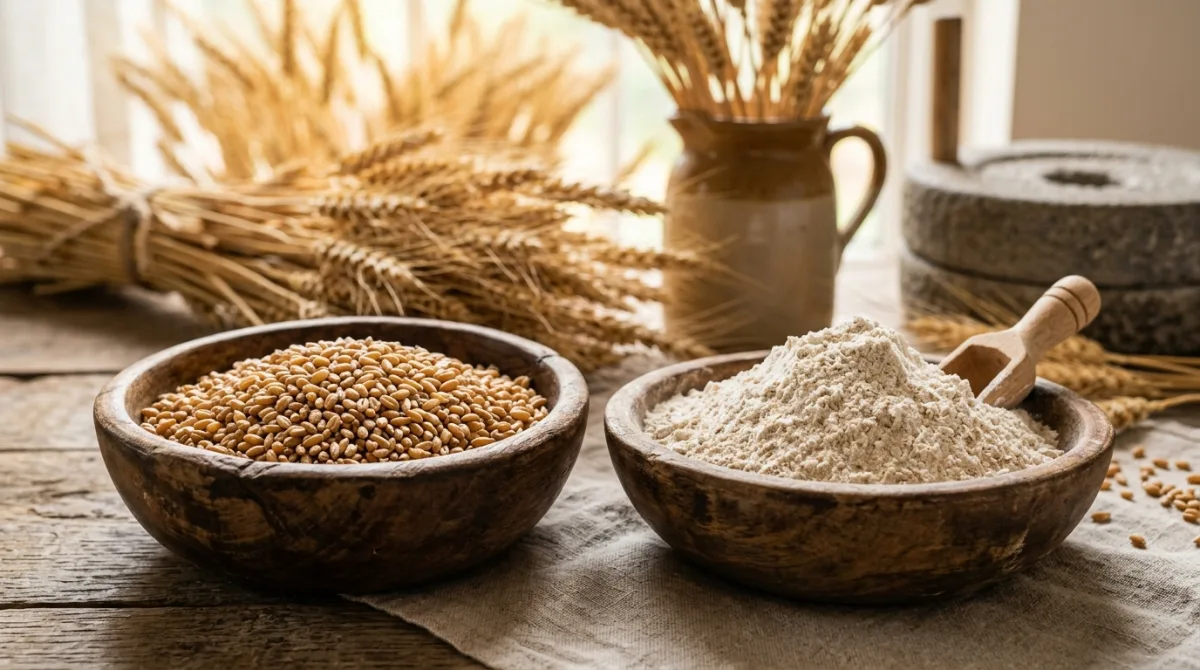
Because the soil retains deep underground moisture without top-flooding, the wheat root network is forced to delve over four feet deep into mineral-rich subterranean strata. This protracted, unforced growth cycle allows the kernel to mature slowly under the radiant Indian winter sun. The outcome is a plump, heavy, translucent grain characterized by an amber-golden lustre and an extraordinary density of natural sucrose and fructose polymers—granting the flour its celebrated, naturally sweet nutty profile.
2. The Moisture Matrix: Why Sharbati Rotis Stay Soft for 16+ Hours
Food scientists quantify the longevity of baked flatbreads through two critical metrics: Water Absorption Index (WAI) and Amylose Retrogradation (the rate at which gelatinized starches recrystallize into hard, brittle structures).
- Standard Commercial Atta (50% – 55% Hydration): High-speed roller mills aggressively fracture starch granules through severe mechanical shearing. When flour has high "damaged starch," it absorbs surface water deceptively fast during initial mixing, but lacks the structural integrity to hold that moisture under heat. Upon cooling, water evaporates rapidly, accelerating retrogradation and leaving you with a rigid, dry roti within 90 minutes.
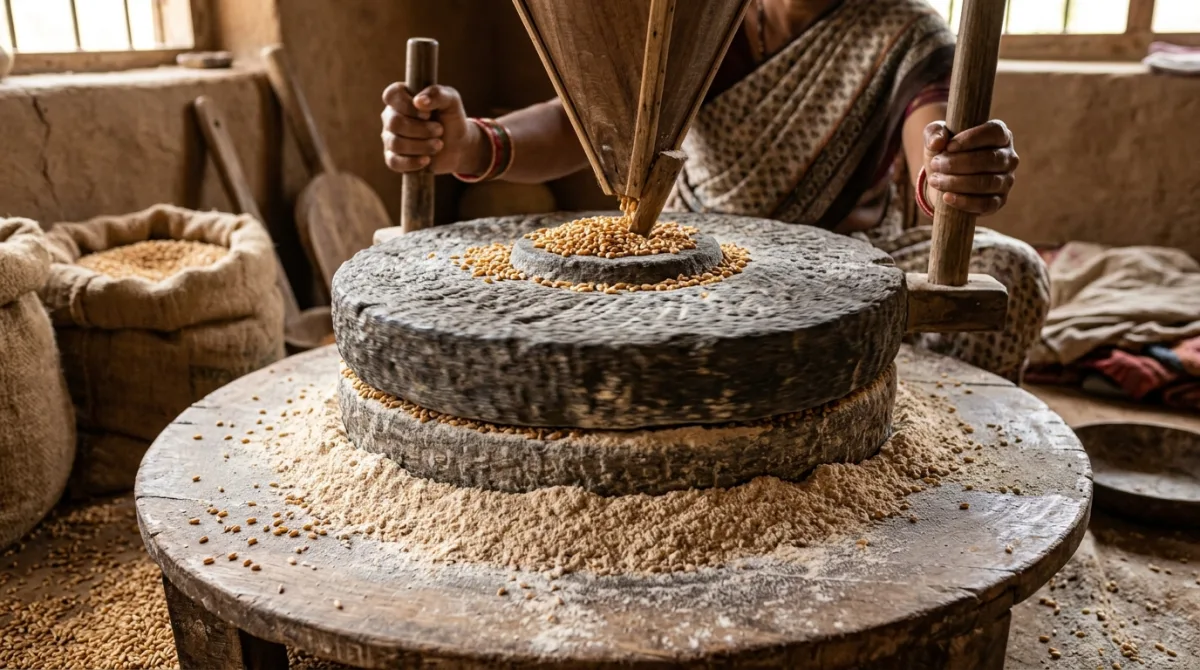
- Pure Stoneground Sharbati Atta (68% – 72% Hydration): Because Sharbati is milled on slow, cold emery stones, its starch granules remain unpunctured. When kneaded, water is drawn deep into the molecular matrix of the complex carbohydrates, forming a supple, viscoelastic gelatinized core during cooking. This trapped moisture acts as a biological shield against drying—guaranteeing phulkas, theplas, and rotlis remain tender and pliable from morning breakfast through late-evening tiffins.
3. Rigorous Nutritional Comparison: Laboratory Certified Breakdown
The physiological difference between authentic stoneground Sharbati flour and regular commercial packaged flour is demonstrated by independent nutritional profiling per 100g serving:
| Biochemical Parameter Raghuvir 100% Sharbati Atta Standard Commercial Mill Atta Health Impact & Significance | |||
| Total Dietary Fibre | 12.4 g / 100g | 8.1 g – 9.0 g | Aids gut motility and feeds beneficial bifidobacteria. |
| Crude Plant Protein | 12.9 g / 100g | 10.2 g – 11.0 g | Balanced gliadin-to-glutenin ratio for elasticity. |
| Glycemic Index (GI) Estimate | 52 – 54 (Low) | 68 – 74 (High) | Prevents sharp post-prandial blood glucose spikes. |
| Water Absorption Capacity | 68% – 72% | 50% – 55% | Preserves crumb moisture; prevents rapid staling. |
| Wheat Germ & Aleurone Retention | 100% Intact (Cold Ground) | Stripped (For long warehousing) | Preserves Vitamin E, Magnesium, and Zinc. |
| Bleaching Agents & Improvers | Zero (Pure & Chemical-Free) | Benzoyl Peroxide / Bromates common | Clean label; 100% natural grain safety. |
4. Metabolic Health: Glycemic Response & Gut Microbiome Vitality
In contemporary preventive nutrition, carbohydrate quality is judged not just by calories, but by how gradually it releases fuel into the bloodstream. Commercial roller milling shatters grain bran into fine microscopic dust and discards the oily germ embryo. The result is a flour that behaves inside your digestive tract almost like refined starch (Maida)—prompting sudden surges in insulin, followed by lethargy, sugar cravings, and progressive metabolic stress.
Raghuvir Stone-Ground Sharbati Atta preserves the coarse, fibrous aleurone cell walls intact. When consumed, these soluble and insoluble fibers create a protective gel-like matrix inside the small intestine, slowing down the enzymatic breakdown of starch into glucose. This translates into:
- Sustained Physical Stamina: Steady, prolonged glucose supply without post-lunch energy crashes.
- Enhanced Satiety: Keeps you feeling comfortably full for 4 to 5 hours, curbing mindless snacking.
- Prebiotic Butyrate Production: The unrefined wheat bran ferments in the colon, producing beneficial short-chain fatty acids (SCFAs) that reinforce gut lining integrity and support immune function.
The Baker’s Rule for Kneading Sharbati Atta
Because premium Sharbati whole wheat flour contains high levels of intact, thirstier dietary fiber, always add 15% to 20% more lukewarm water than you would with regular commercial atta. Never rush the dough—allow it a 20-minute resting period (autolyse) before rolling. You will be rewarded with rotis so light, delicate, and aromatic that they melt in your mouth.
5. Frequently Asked Questions (E-E-A-T Expert Insights)
Q1: Is Sharbati atta safe for individuals with pre-diabetes or type-2 diabetes?
Yes, in moderation as part of a balanced diet. With an estimated Glycemic Index between 52 and 54 (classified as low GI) and over 12 grams of dietary fibre, pure stoneground Sharbati atta produces significantly slower blood glucose release compared to industrial roller-milled flours or hybrid wheats. Always consult your personal physician for personalized carbohydrate targets.
Q2: Does Sharbati flour contain added sweeteners to create its sweet aroma?
Absolutely not. In authentic Sharbati wheat, the delicate sweetness is 100% natural. It arises from the genetic concentration of simple and complex sucrose isomers synthesized by the plant during its slow, rainfed maturation in sun-drenched black soils.
Q3: How can I visually verify genuine Sharbati flour at home?
Genuine stone-ground Sharbati flour has a warm, creamy-golden hue with visible specks of natural amber bran, never a sterile stark-white appearance. Furthermore, when mixed with warm water, it immediately releases a rich, nutty, wholesome aroma reminiscent of harvest fields, rather than a chalky or neutral scent.
“Food purity is not merely an ingredient choice; it is an everyday investment in the cellular health of your family. When you honor the natural genetic brilliance of Sharbati whole wheat, your dining table is rewarded with authentic taste, deep satiety, and generational vitality.”